
Waking Up at 3 a.m. Every Night? Hormones May Be Why—And BHRT May Help
Waking Up at 3 a.m. Every Night? Hormones May Be Why—And BHRT May Help
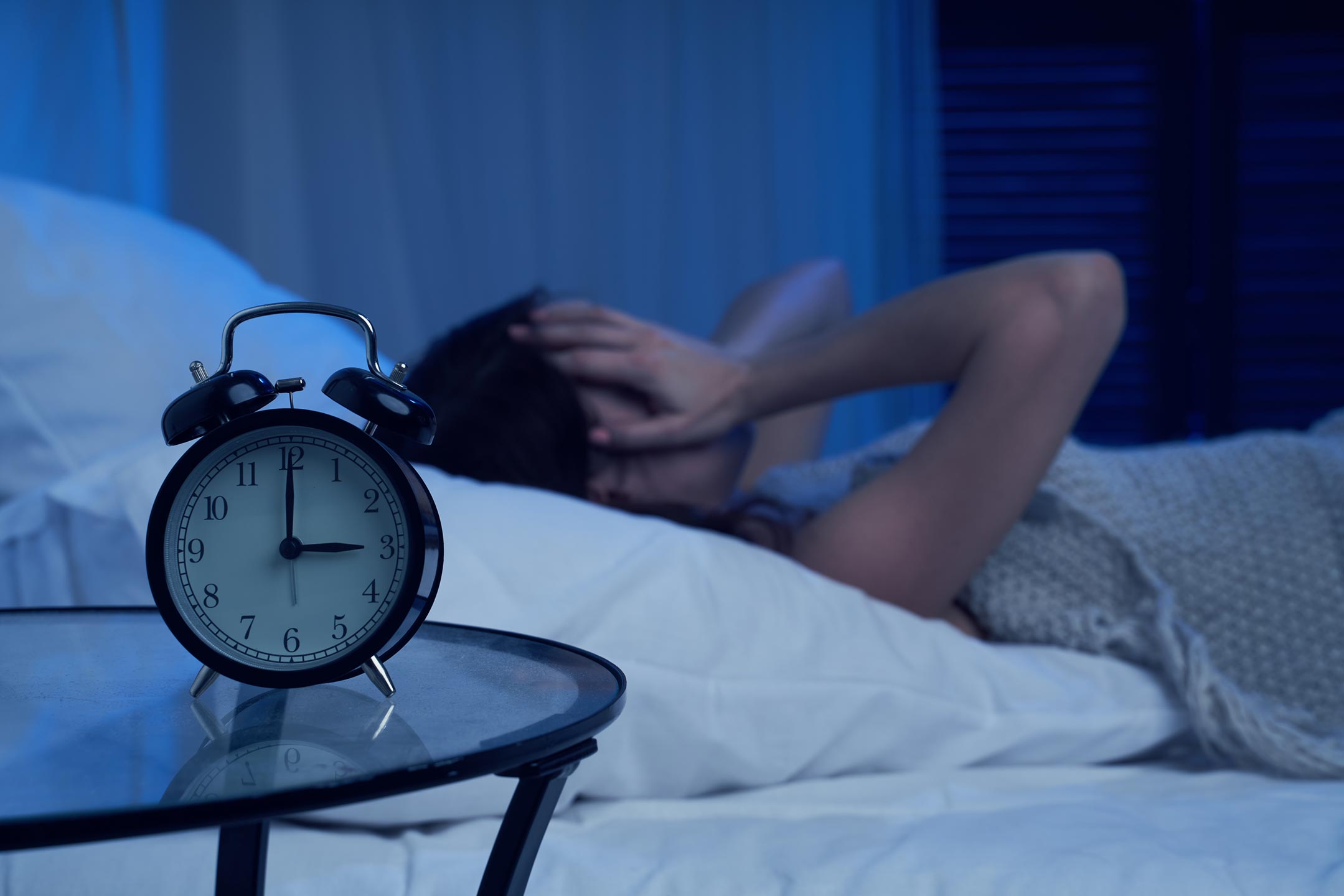
You fall asleep fine. But somewhere around 2 or 3 in the morning, you’re wide awake—mind racing, temperature off, unable to drift back. Or maybe sleep doesn’t come easily at all, and you lie there for an hour or more before your body finally settles. Or you wake multiple times through the night and never feel truly rested, even after eight hours in bed.
Sleep problems are one of the most common—and most disruptive—symptoms of perimenopause. Yet they remain dramatically underrecognized as a hormonal issue.
Most women dealing with this are handed a sleep hygiene checklist: no screens before bed, cooler room, consistent schedule. All of it is reasonable advice. But when the problem is hormonal, these measures address the surface while leaving the root completely untouched. If you’ve been managing sleep disruption for months or years with limited success, hormones deserve a serious look.
perimenopause sleep problems
The Hormones Responsible for Sleep
Understanding why perimenopause disrupts sleep requires understanding the specific roles that progesterone and estrogen play in the brain’s sleep systems—roles that go well beyond reproduction.
Progesterone: the natural sleep hormone
Progesterone is often called the calming hormone, and for good reason. It acts on GABA receptors in the brain—the same receptors targeted by benzodiazepines and certain sleep medications—producing a sedative, anxiety-reducing effect that is crucial for initiating and maintaining deep sleep. Progesterone also has a natural anxiolytic effect that quiets the mental activity that keeps many women lying awake at night.
Critically, progesterone is typically the first hormone to decline in perimenopause—often significantly, years before estrogen begins to drop. Women in their early-to-mid 40s with still-regular cycles can already be experiencing meaningful progesterone deficiency. The result is sleep that becomes lighter, more fragmented, and less restorative, with no obvious external cause. Nothing in your life has changed. But your sleep has.
Estrogen and sleep architecture
Estrogen influences the distribution of REM and deep sleep stages—the restorative phases of your sleep cycle where memory consolidation, cellular repair, and emotional processing occur. As estrogen fluctuates and declines, sleep architecture becomes disrupted.
Women often notice more vivid or disturbing dreams (a marker of disrupted REM), waking more easily to minor sounds or temperature changes, and spending less time in the deepest, most physically restorative sleep phases.
Estrogen also regulates the production of serotonin and melatonin, both of which play direct roles in your circadian rhythm and your ability to feel appropriately sleepy at the right time of night. Its decline can shift your natural sleep timing and make the early-morning waking that many perimenopausal women experience feel almost involuntary.
Night sweats and the wake-up cycle
For many women, waking at 3 or 4 a.m. is accompanied by warmth, sweating, or a racing heart—the vasomotor instability that accompanies estrogen fluctuation. Even mild night sweats can disrupt the thermal regulation your body depends on to maintain sleep continuity. And once you’re awake, the cortisol that naturally rises in the early-morning hours makes getting back to sleep significantly harder.
This is why the 3 a.m. wake-up can feel so stubborn—it’s not just one disruption, it’s a cascade of physiological events working against each other.

perimenopause sleep problems
Why Sleep Hygiene Tips Often Aren’t Enough
Sleep hygiene advice—consistent schedules, limiting caffeine, reducing screen time, keeping the bedroom cool and dark—is genuinely useful, and there’s good evidence behind it. But it works by optimizing the conditions for sleep. It does not restore the hormonal environment that produces natural, restorative sleep in the first place.
Sleep medications, whether prescription or over-the-counter, work by sedating the nervous system. They can help you fall or stay asleep, but they do nothing to address declining progesterone, estrogen fluctuation, or the disrupted sleep architecture that results. Many women find that sleep aids become less effective over time, or that they sleep longer hours but still wake unrefreshed—because the quality and structure of sleep, not just its duration, is compromised.
When the underlying issue is hormonal, the most direct solution is to address the hormone itself.
“When I made the decision over 10 years ago to start receiving Bio-Identical Hormone Replacement I honestly thought it was just going to be another gimmick that really would not work, but I thought I would give it a try. I am happy that I took the chance and have never looked back! I believe that the Hormone Replacement has helped me with my overall health as well as my appearance. I could not be happier with the results!
After talking with numerous doctors that do Hormone Replacement I selected Dr. Bobbitt and his staff. It was the correct choice. Dr. Bobbitt is respectful, helpful and kind to his patients. All questions or concerns are addressed without hesitation. A trait that is hard to find.
The staff in his office has never changed in the over 10 years since I have been seeing Dr. Bobbitt. Just like Dr. Bobbitt, they are wonderful to work with and respond to requests and questions in a quick and efficient manner. They all feel like family and I look forward to seeing them when I walk through the door. When making the choice to receive Bio-Identical Hormone Replacement look no further than Dr. Bobbitt and his exceptional staff. You will be so happy you did!”
Jeanne
Cincinnati

perimenopause sleep problems
How BHRT Approaches Sleep in Perimenopause
A well-designed BHRT plan for women with sleep disruption focuses on restoring hormones—particularly progesterone—to levels that support the brain’s natural sleep architecture. Through the SottoPelle® pellet method, hormone delivery is consistent over time, avoiding the peaks and troughs of other delivery methods that can themselves become a source of sleep disruption.
Women who address perimenopausal sleep problems through BHRT often report:
- Falling asleep more easily and staying asleep through the night
- Reduced frequency and intensity of night sweats and early-morning waking
- Feeling genuinely rested after a full night’s sleep—sometimes for the first time in years
- Improved mood, focus, and energy during the day as a downstream effect of better sleep quality
It is worth noting that sleep is not a luxury. It is one of the most important factors in long-term physical and cognitive health. Chronic sleep disruption has well-documented effects on metabolism, immune function, cardiovascular health, mood regulation, and cognitive function. Research consistently links poor sleep to increased risk of anxiety, depression, weight gain, and cardiovascular disease. Treating the root cause of sleep disruption isn’t just about comfort—it’s about protecting your health over the long term.
Ready to explore a personalized plan? Book a BHRT consult with our clinic.
perimenopause sleep problems
FREQUENTLY ASKED QUESTIONS
Why do I keep waking up at 3 a.m. during perimenopause?
The 3 a.m. wake-up is one of the most commonly reported sleep complaints among perimenopausal women, and it usually has a hormonal explanation. Declining progesterone reduces the brain’s natural sleep-sustaining signal. Estrogen fluctuation can trigger mild vasomotor events—warmth, a racing heart—that pull you out of deep sleep. And naturally rising cortisol in the early morning hours makes it hard to fall back asleep once you’re awake. Together, these create a pattern that is very consistent and very disruptive.
Can hormone decline cause insomnia even if I don't have hot flashes?
Yes. Hot flashes and night sweats are the most well-known perimenopausal sleep disruptors, but they are not the only ones. Progesterone deficiency alone can cause insomnia, light sleep, and frequent waking without any accompanying vasomotor symptoms. Many women with significant sleep disruption have minimal or no hot flashes—and their hormone decline is still the cause.
I've tried melatonin and sleep aids. Why don't they work?
Melatonin helps regulate circadian timing—it signals to your brain that it’s time for sleep. It can be helpful for jet lag or mild circadian disruption, but it doesn’t address the structural sleep changes caused by declining progesterone or the vasomotor events triggered by estrogen fluctuation. Sleep medications sedate the nervous system but don’t restore the hormonal environment that produces natural, restorative sleep. If the root cause is hormonal, treating the symptom without treating the cause typically produces limited and temporary results.
How quickly does BHRT improve sleep?
Most patients begin noticing improvements within the first two to four weeks following pellet insertion, with more significant and stable results typically felt by six to eight weeks. Sleep is often one of the first areas where patients report improvement, because restoring progesterone has a relatively direct and fast-acting effect on the brain’s GABA system.
Is it safe to use BHRT specifically for sleep problems?
BHRT candidacy is evaluated individually based on your full health history, not just your sleep symptoms. Sleep disruption is a legitimate and significant reason to pursue a hormone evaluation—it doesn’t need to be accompanied by other symptoms to warrant attention. At Vigour, we assess each patient comprehensively and recommend treatment only when it’s appropriate.
How do I get started?
Contact Vigour at (513) 891-BHRT (2478) or visit youagain.net to schedule a consultation.
You Don’t Have to Accept It
If you’re lying awake at 3 a.m. wondering whether this is just getting older, the answer is: not necessarily. Perimenopause-related sleep disruption is a real, identifiable, and often treatable condition. At Vigour, we take sleep symptoms seriously—because we know what chronic sleeplessness does to every other area of your life.
Contact Vigour at (513) 891-BHRT (2478) or visit youagain.net.
The Vigour Team
Dr. Bradley Bobbitt
Medical Director, Vigour
Dr. Bobbitt is the medical director of Vigour, specializing in bio-identical hormone replacement therapy and plastic surgery. He graduated cum laude from Harvard University and received his medical degree from the University of Cincinnati where he earned the Christian R. Holmes Award. He completed his residency training at University of Cincinnati where, during his Chief Resident year, he was presented the Gerson Lowenthal Award in recognition of outstanding microsurgical skills. In 2003, he became board certified from the American Board of Otolaryngology in General Otolaryngology, Otology, Facial Plastic Surgery, Head and Neck Surgery, and Pediatric Otolaryngology.

The Vigour Team
Dr. Bradley Bobbitt
Medical Director, Vigour
Dr. Bobbitt is the medical director of Vigour, specializing in bio-identical hormone replacement therapy and plastic surgery. He graduated cum laude from Harvard University and received his medical degree from the University of Cincinnati where he earned the Christian R. Holmes Award. He completed his residency training at University of Cincinnati where, during his Chief Resident year, he was presented the Gerson Lowenthal Award in recognition of outstanding microsurgical skills. In 2003, he became board certified from the American Board of Otolaryngology in General Otolaryngology, Otology, Facial Plastic Surgery, Head and Neck Surgery, and Pediatric Otolaryngology.