
Why Am I So Tired All the Time? Perimenopause Fatigue May Be a Hormone Problem
Why Am I So Tired All the Time? Perimenopause Fatigue May Be a Hormone Problem
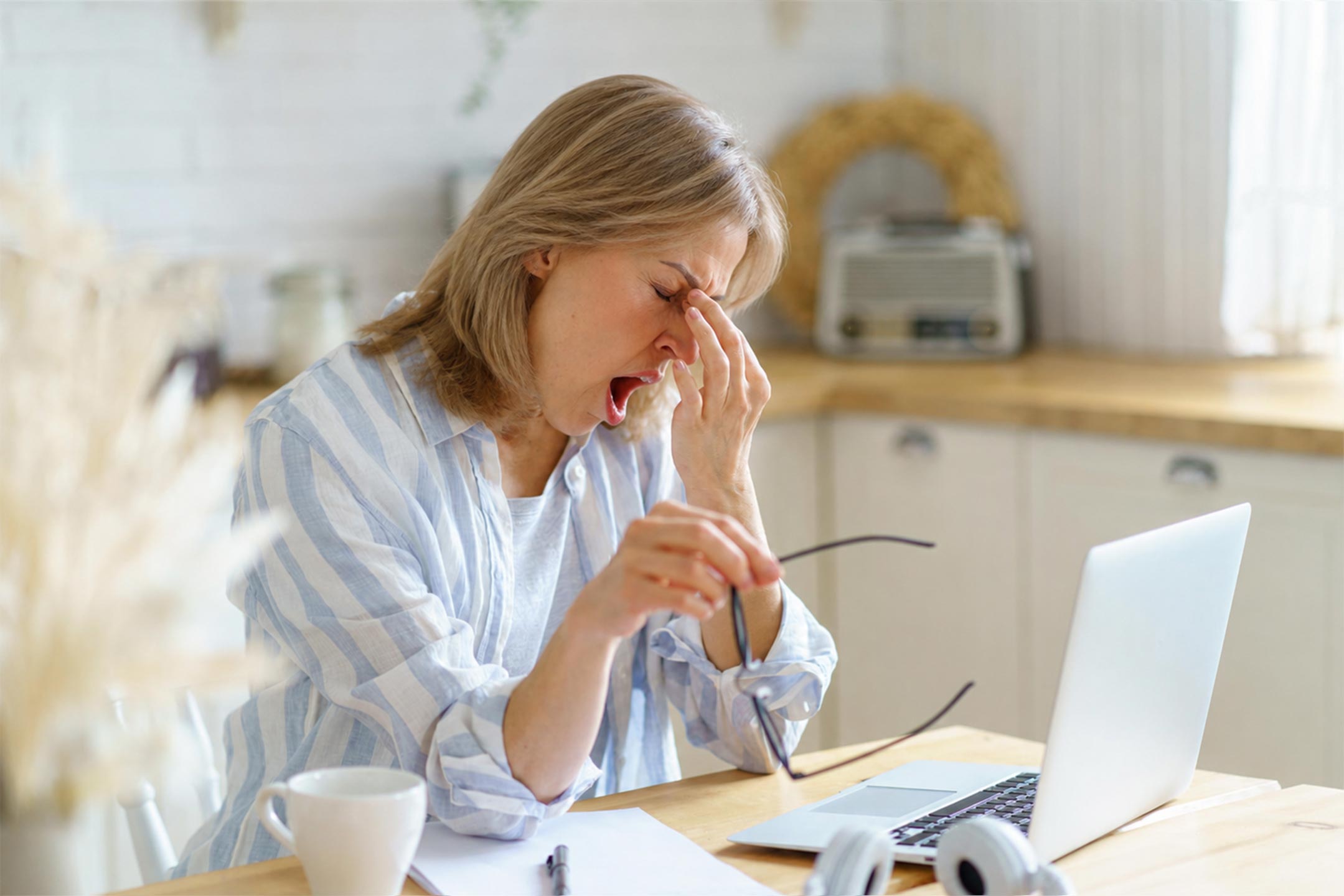
You go to bed exhausted. You wake up exhausted. You push through the day on coffee and sheer will—and still feel like you’re running on empty by 2 p.m. If this sounds familiar, you’ve probably already ruled out the obvious: you’re sleeping enough hours, you’re not overcommitting any more than usual, and your bloodwork came back normal.
So why are you so tired?
For many women in their 40s and early 50s, the answer isn’t a busy schedule or a lack of iron. It’s hormones—specifically the gradual decline of estrogen, progesterone, and testosterone that defines perimenopause, the transitional years before menopause that can last a decade or longer. Understanding what’s actually driving the fatigue is the first step toward doing something about it.

perimenopause fatigue and hormone imbalance
THE HORMONE-FATIGUE CONNECTION
Hormones don’t just regulate your reproductive cycle. They play a central role in how your body produces energy, regulates sleep, responds to stress, and maintains mental focus. When they start to decline—even modestly—the effects can be significant.
Estrogen and energy metabolism. Estrogen influences how your cells use glucose for fuel. As levels drop in perimenopause, this metabolic efficiency decreases. Your body is essentially working harder to produce the same amount of usable energy. The result is fatigue that feels disproportionate to your activity level—because it is.
Progesterone and sleep quality. Progesterone has a natural calming, sleep-supporting effect. It acts on GABA receptors in the brain—the same receptors targeted by some sleep medications. As progesterone declines in perimenopause, many women experience disrupted sleep: difficulty falling asleep, waking in the middle of the night, or restless, unrefreshing sleep even after a full seven or eight hours. Poor sleep compounds fatigue—and when sleep disruption is hormonal, improving sleep hygiene alone rarely solves the problem.
Testosterone’s role in women’s energy. Testosterone isn’t just a male hormone. Women produce it too, and it plays an important role in energy, motivation, and physical stamina. Testosterone levels in women begin declining in the mid-30s and continue dropping through perimenopause. Low testosterone in women is frequently overlooked—but it’s a real contributor to the flat, depleted feeling many describe as “just not feeling like myself anymore.”
Schedule your treatment session today.
Call today for more information or to book an appointment, 513-891-2478

perimenopause fatigue and hormone imbalance
WHAT PERIMENOPAUSE FATIGUE ACTUALLY FEELS LIKE
Women often describe perimenopause fatigue differently from ordinary tiredness. Common descriptions include a “bone-tired” feeling that sleep doesn’t fix, waking up unrefreshed even after a full night in bed, difficulty recovering from normal physical activity, afternoon energy crashes that feel like hitting a wall, and a general flatness or lack of drive that feels unusual.
If any of these sound familiar—especially alongside other perimenopausal symptoms like irregular periods, mood changes, or difficulty concentrating—hormone imbalance deserves serious consideration.
Ready to explore a personalized plan? Book a BHRT consult with our clinic.
“When I made the decision over 10 years ago to start receiving Bio-Identical Hormone Replacement I honestly thought it was just going to be another gimmick that really would not work, but I thought I would give it a try. I am happy that I took the chance and have never looked back! I believe that the Hormone Replacement has helped me with my overall health as well as my appearance. I could not be happier with the results!
After talking with numerous doctors that do Hormone Replacement I selected Dr. Bobbitt and his staff. It was the correct choice. Dr. Bobbitt is respectful, helpful and kind to his patients. All questions or concerns are addressed without hesitation. A trait that is hard to find.
The staff in his office has never changed in the over 10 years since I have been seeing Dr. Bobbitt. Just like Dr. Bobbitt, they are wonderful to work with and respond to requests and questions in a quick and efficient manner. They all feel like family and I look forward to seeing them when I walk through the door. When making the choice to receive Bio-Identical Hormone Replacement look no further than Dr. Bobbitt and his exceptional staff. You will be so happy you did!”
Jeanne
Cincinnati

perimenopause fatigue and hormone imbalance
WHY “YOUR LABS ARE NORMAL” ISN’T THE FINAL WORD
Standard hormone panels often miss the early stages of perimenopausal decline. Hormone levels fluctuate significantly throughout the month, and a single snapshot may not capture the full picture. Many women with real, functional hormone imbalances receive normal results on routine bloodwork—and are sent home without answers.
A thorough evaluation for perimenopause fatigue should look at the full hormonal picture in context: not just whether levels fall within a broad reference range, but whether they’re optimal for how you feel and function. There is a meaningful difference between “within normal limits” and “optimal for this individual at this stage of life.”

Ready to explore a personalized plan? Book a BHRT consult with our clinic.
perimenopause fatigue and hormone imbalance
HOW BHRT MAY HELP
Bio-Identical Hormone Replacement Therapy (BHRT) using the SottoPelle® pellet method works by restoring hormones to levels that are consistent, physiologically appropriate, and matched to your individual biology—not a generic protocol.
For women dealing with fatigue driven by hormone decline, restoring estrogen, progesterone, and/or testosterone to optimal levels may improve the quality and depth of sleep, support more stable and sustained energy throughout the day, reduce the mental fog that often accompanies physical exhaustion, and help your body regulate stress more effectively.
The pellet delivery method maintains consistent hormone levels over time—avoiding the peaks and troughs of other delivery methods that can themselves contribute to fatigue and mood instability. Most patients are re-evaluated every three to six months, with pellet insertion taking only a few minutes during an office visit.
perimenopause fatigue and hormone imbalance
FREQUENTLY ASKED QUESTIONS
How do I know if my fatigue is hormonal or something else?
Hormonal fatigue tends to come with other perimenopausal symptoms—irregular cycles, mood shifts, difficulty sleeping, or changes in memory and concentration. It also tends to be persistent rather than situational. That said, fatigue can have multiple causes, and a thorough evaluation should rule out thyroid dysfunction, anemia, and other contributing factors before focusing solely on hormones. At Vigour, we take a comprehensive approach.
Can perimenopause fatigue start before my periods become irregular?
Yes. Progesterone is often the first hormone to decline in perimenopause, and it can drop meaningfully years before menstrual irregularity begins. Many women in their early 40s with regular cycles are already experiencing significant hormonal shifts that affect sleep, energy, and mood.
Will BHRT give me my energy back right away?
Most patients notice gradual improvement over the first few weeks following pellet insertion, with optimal effects typically felt within four to six weeks. Because BHRT addresses the underlying hormonal environment rather than masking symptoms, the results tend to build and stabilize over time rather than offering a temporary boost.
Is BHRT safe for women experiencing fatigue?
BHRT has been used for decades and has an established safety profile when prescribed and monitored by an experienced provider. The FDA’s recent removal of certain warning labels from bio-identical hormones reflects the growing body of evidence supporting their appropriate use. As with any medical treatment, candidacy is evaluated individually based on personal and family health history.
What if I've already tried other treatments for fatigue without success?
This is one of the most common situations we see at Vigour. Many patients come to us after cycles of inconclusive labs and treatments that addressed everything except hormones. If the root cause is perimenopausal hormone decline, addressing that directly—rather than treating the symptom of fatigue in isolation—typically produces better results.
How do I get started?
Contact Vigour at (513) 891-BHRT (2478) or visit youagain.net to schedule a consultation. We’ll review your history, discuss your symptoms, and determine whether BHRT is an appropriate fit.
TAKE THE NEXT STEP
Fatigue that doesn’t respond to rest, that’s accompanied by other hormonal symptoms, or that’s interfering with your quality of life is worth a conversation with a provider who specializes in hormone health. The exhaustion you’re feeling may not be permanent—and it may not be something you simply have to accept.
Contact Vigour at (513) 891-BHRT (2478) or visit youagain.net.
The Vigour Team
Dr. Bradley Bobbitt
Medical Director, Vigour
Dr. Bobbitt is the medical director of Vigour, specializing in bio-identical hormone replacement therapy and plastic surgery. He graduated cum laude from Harvard University and received his medical degree from the University of Cincinnati where he earned the Christian R. Holmes Award. He completed his residency training at University of Cincinnati where, during his Chief Resident year, he was presented the Gerson Lowenthal Award in recognition of outstanding microsurgical skills. In 2003, he became board certified from the American Board of Otolaryngology in General Otolaryngology, Otology, Facial Plastic Surgery, Head and Neck Surgery, and Pediatric Otolaryngology.

The Vigour Team
Dr. Bradley Bobbitt
Medical Director, Vigour
Dr. Bobbitt is the medical director of Vigour, specializing in bio-identical hormone replacement therapy and plastic surgery. He graduated cum laude from Harvard University and received his medical degree from the University of Cincinnati where he earned the Christian R. Holmes Award. He completed his residency training at University of Cincinnati where, during his Chief Resident year, he was presented the Gerson Lowenthal Award in recognition of outstanding microsurgical skills. In 2003, he became board certified from the American Board of Otolaryngology in General Otolaryngology, Otology, Facial Plastic Surgery, Head and Neck Surgery, and Pediatric Otolaryngology.